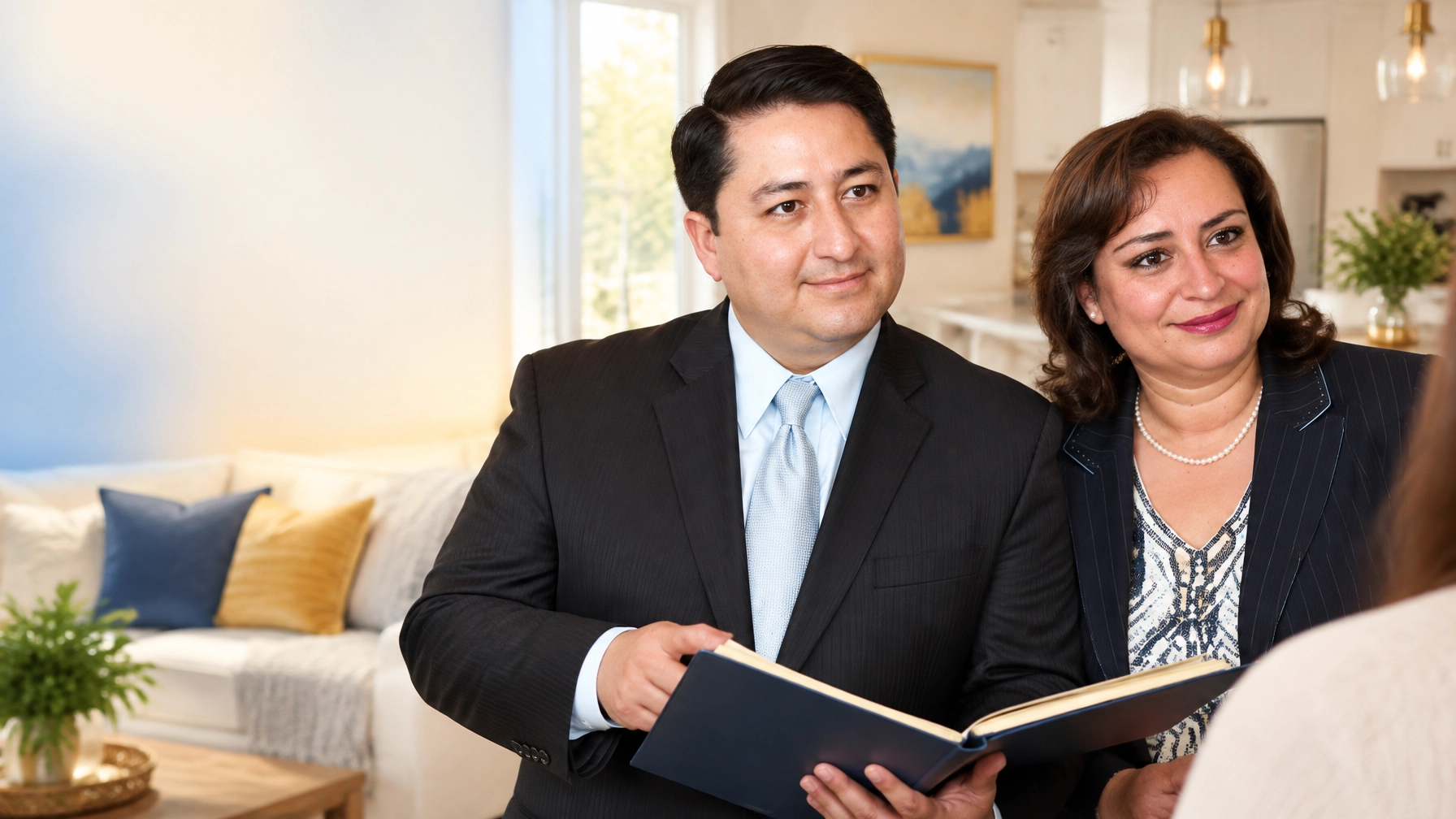
By Rony Velasquez, Real Estate and Mortgage Broker, Realtor, and Mortgage Loan Originator
The answer may depend on one document most families never see
Rony Velasquez has held a DRE license since 2004, completed more than twenty two years in real estate, closed more than three thousand transactions, helped more than five hundred families, and holds Mortgage Loan Originator and NMLS credentials. In inherited-home situations, one of the first questions families ask is simple:
Should the Buena Park home be placed in a trust, or should the family proceed through probate?
The important detail is that heirs usually cannot choose a trust after the owner has died to automatically avoid probate. The answer depends largely on how the home was titled before death, whether a small-estate shortcut applies, and what the family wants to do next.
What is probate, and why can it take so long in California?
Probate is the court-supervised process used to identify a deceased person’s assets, pay valid debts and expenses, resolve disputes, and transfer remaining property to heirs or beneficiaries.
If the home was owned only in the deceased person’s individual name, probate may be required unless another legal transfer method applies.
A typical California probate involving real estate can take approximately nine to eighteen months, and complicated cases may take longer. The process may include:
- Filing a petition with the Superior Court.
- Appointing an executor or administrator, also called the personal representative.
- Providing notices to heirs and creditors.
- Allowing time for creditor claims.
- Appraising the home and other assets.
- Paying mortgages, property taxes, insurance, repairs, and valid debts.
- Obtaining court approval for final distribution.
California can be more expensive than states with simpler probate systems because statutory attorney and executor fees are generally based on the gross value of the probate estate. Gross value means the value before subtracting a mortgage or other liens.
For example, on a probate estate valued at one million dollars, the statutory fee schedule can result in approximately twenty three thousand dollars for the attorney and another twenty three thousand dollars for the personal representative. That combined estimate does not include court filing fees, publication costs, appraisal fees, bond premiums, property expenses, or extraordinary legal work.
The California Courts explain that a properly prepared living trust can help loved ones avoid the delay and expense of probate court. Read the official guidance on living trusts and estate planning.

What does a living trust do differently?
A living trust is a legal arrangement created during a person’s lifetime. The person who creates the trust generally transfers ownership of assets, such as a home, into the trust and names a successor trustee to manage those assets after death or incapacity.
When the Buena Park home was properly titled in the trust, the successor trustee may generally:
- Collect information about the home and other trust assets.
- Pay valid expenses and debts.
- Maintain insurance and the property.
- Sell the home if the trust permits a sale.
- Transfer or distribute the home according to the trust instructions.
- Work with a title company without opening a full probate case.
However, the trust must actually own the home. A signed trust document alone may not be enough if the deed was never transferred into the trust.
This is a common source of confusion. A family may discover a trust in a desk drawer but later learn that the property deed was still held in the deceased person’s individual name. In that situation, the family may still need probate or another court procedure.
A trust also does not eliminate every responsibility. The successor trustee may need legal and tax advice, notices to beneficiaries, accounting, title work, and documentation of the transfer.
Can a small estate avoid full probate?
Sometimes. California offers summary procedures for certain estates and real properties that fall under specific value limits and eligibility requirements.
For deaths on or after April 1, 2025, California Courts identify these examples:
- A petition for the decedent’s main California residence may be available when the home value is no more than seven hundred fifty thousand dollars.
- A simplified procedure for certain California real property may apply when the total value is no more than sixty nine thousand six hundred twenty five dollars.
- A personal-property small-estate affidavit may apply to assets such as bank accounts and vehicles, but it does not generally transfer title to a house.
The exact procedure depends on the date of death, property value, ownership, liens, heirs, and whether the home was the decedent’s primary residence. Families should review the California Courts summary-transfer rules before assuming that a small-estate shortcut applies.
A Buena Park home may be worth more than the applicable threshold, so a title review and legal evaluation are important.
How does Proposition 19 affect the inherited home?
Proposition 19 changed California’s parent-child and grandparent-grandchild property-tax rules for transfers occurring on or after February 16, 2021.
Under current rules, an inherited property may qualify for an intergenerational property-tax exclusion only when specific requirements are satisfied. Generally:
- The property must qualify as a family home or family farm.
- The transferor’s home must have been eligible for the homeowners’ exemption or a disabled veterans’ exemption.
- The eligible child or qualifying grandchild generally must make the home their principal residence.
- The property must remain the heir’s principal residence to maintain the exclusion.
- The applicable claim must be filed with the county assessor on time.
The value limit is based on the existing taxable value plus an inflation-adjusted amount. For transfers between February 16, 2025 and February 15, 2027, the indexed amount is one million forty four thousand five hundred eighty six dollars.
If the home’s market value exceeds the applicable limit, the excess may be added to the taxable value rather than causing an automatic loss of every potential benefit. If the heir does not occupy the property as a principal residence, the exclusion may not apply or may later be lost.
The rules can also affect families deciding whether to sell, rent, or keep the home. Review the California State Board of Equalization Proposition 19 information and speak with a qualified tax professional or estate attorney before making a decision.

What changes if the family wants to sell, finance, or keep the home?
If the family wants to sell
A successor trustee may be able to list and sell a trust-owned home without opening probate, provided the trust permits the transaction and the trustee has authority.
During probate, the personal representative must first receive court authority and complete required notices and procedures. The sale may take longer because the estate must establish legal authority, resolve creditor issues, and satisfy title and court requirements.
Before listing, the family should confirm:
- Who has authority to sign the listing agreement.
- Whether the deed is held by a trust, individuals, or the estate.
- Whether there is a mortgage, reverse mortgage, or home-equity loan.
- Whether all heirs agree with the sale.
- Whether repairs and property expenses can be paid.
- Whether Proposition 19 claims could be affected by a sale.
If an heir wants to keep the home
Keeping the home may provide stability, family continuity, and a long-term place to live. But the heir should understand the full financial picture:
- Mortgage payments and loan terms.
- Property taxes after any reassessment.
- Insurance and maintenance.
- Shared ownership with siblings or other beneficiaries.
- Buyout funds if one heir wants to keep the property and others want cash.
- Future estate planning.
If ownership is transferred to an heir, a lender may require updated title documents, proof of authority, or a new loan application for refinancing. A Mortgage Loan Originator can help evaluate financing options, but cannot replace legal or tax advice.
If the family wants to borrow against the home
Financing may be difficult until title is clear. A lender generally needs to know who owns the property, who may sign loan documents, and whether the borrower has legal authority to pledge the home as collateral.
A trust-owned home may require a certification of trust and other trust documents. A probate property may require court appointment documents and evidence of the personal representative’s authority.
Which option is better for your family?
| Situation | Likely direction |
|---|---|
| The home was properly titled in a living trust | Trust administration may avoid full probate |
| The home was owned individually and exceeds shortcut limits | Formal probate may be required |
| The home was the decedent’s primary residence and fits the current value limit | A simplified court petition may be available |
| One heir wants to keep the home | Review title, mortgage, property taxes, and family agreement |
| The family wants to sell quickly | Confirm authority before listing or accepting an offer |
| The home may qualify under Proposition 19 | Review residence requirements and file the correct claim promptly |

What should Buena Park and surrounding-area heirs do first?
Use this checklist before making repairs, signing a listing agreement, or transferring ownership:
- Locate the original trust, will, deed, and mortgage documents.
- Order a preliminary title report for the Buena Park property.
- Confirm whether the home was titled in a trust, held jointly, or owned individually.
- Record the date of death and estimate the home’s current market value.
- Check whether a small-estate procedure might apply.
- Identify all heirs, beneficiaries, creditors, and decision-makers.
- Ask a probate attorney to explain the legal process.
- Ask a tax professional to review Proposition 19 and possible tax consequences.
- Review insurance, utilities, mortgage payments, property taxes, and urgent repairs.
- Decide whether the family’s priority is selling, keeping, refinancing, or distributing the proceeds.
Maya Team Inc. can help families understand the real estate and mortgage decisions that follow, including preparing a sale strategy, reviewing potential financing paths, and coordinating with attorneys, title professionals, and tax advisors. Visit the Maya Team Inc. community and resources.
This article is general educational information and is not legal, tax, or financial advice. Probate, trust administration, Proposition 19, and inherited-property decisions should be reviewed with the appropriate licensed professionals.
Need a clear next step?
Contact Rony Velasquez at 562-762-9634, email mayateaminc@gmail.com, send a direct message through Maya Team Inc., or share this article with your family before anyone signs documents or begins a sale.
If you know someone in Buena Park, Cerritos, Orange County, or Los Angeles County who has inherited a home and does not know where to start, send this to them.