The Short Answer: Getting down payment assistance through the California Housing Finance Agency (CalHFA) involves five main steps: finding an approved lender, completing a homebuyer education course, verifying your eligibility (income and credit), gathering your financial documentation, and getting pre-approved to start your home search.
Buying your first home in California can feel like trying to climb Mount Everest in flip-flops. The prices are high, the competition is stiff, and coming up with a 20% down payment is often the biggest hurdle. But here is the good news: you don't actually need 20% down. In fact, with CalHFA programs, you might be able to get into a home with very little out of your own pocket.
At Maya Team Inc., we specialize in helping first-time buyers navigate these complex programs. Let’s break down exactly how you can secure this assistance and finally stop paying your landlord's mortgage.
What is CalHFA?
Before we dive into the steps, let’s define what we’re talking about. The California Housing Finance Agency (CalHFA) is a state-run agency that provides affordable housing opportunities. They don’t lend money directly to you; instead, they partner with private lenders to offer low-interest rate mortgages and, most importantly, "silent second" loans for down payment and closing cost assistance.
Programs like MyHome Assistance can provide a deferred-payment junior loan of up to 3.5% of the purchase price to help with your down payment. This can be a game-changer when combined with an FHA or Conventional loan.

Step 1: Find a CalHFA-Approved Lender
This is the most important step. You cannot walk into just any bank and ask for a CalHFA loan. Only specific lenders and loan officers are trained and approved to handle these state-sponsored programs.
A CalHFA-approved lender understands the specific "overlays" or extra rules that the state requires. They know how to layer the assistance programs (like MyHome) on top of your primary mortgage (FHA or Conventional).
Why this matters: A regular loan officer might tell you that you don't qualify for a loan because your down payment is too small. A CalHFA specialist will look at that same situation and say, "We can cover that gap with a state grant or a silent second loan."

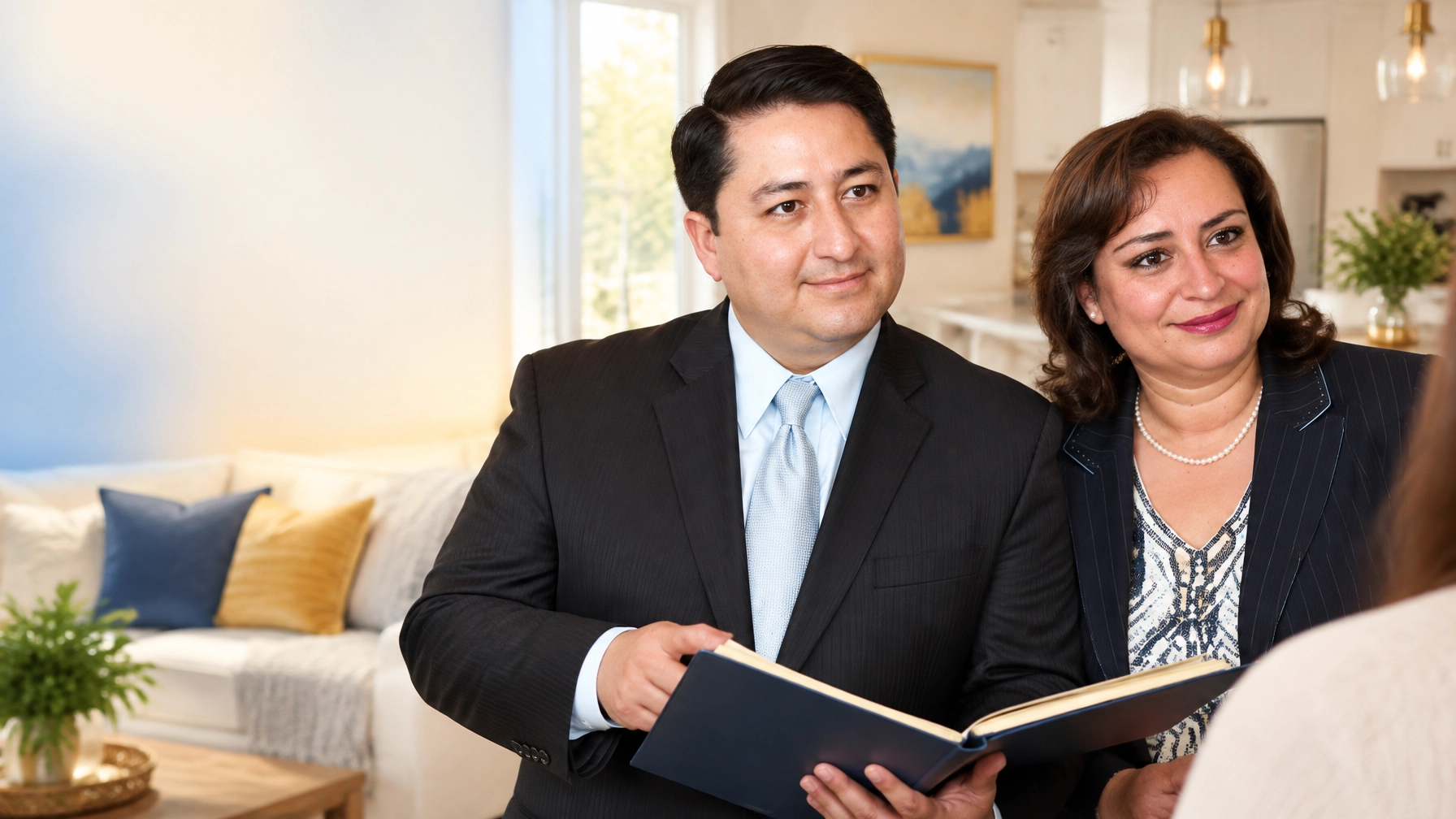
(A friendly loan officer explaining CalHFA options to a young couple.)
Step 2: Complete the Required Homebuyer Education Course
CalHFA requires all borrowers to complete a homebuyer education course. This isn't just a "check the box" activity; it’s designed to ensure you understand the long-term responsibilities of homeownership.
- The Course: Most buyers take the eHome America online course.
- The Cost: There is usually a small fee (around $99).
- The Goal: You will receive a certificate of completion, which is a mandatory document for your loan file.
We recommend doing this early in the process. It takes about 5 to 8 hours to complete. If you wait until you're under contract on a house, it just adds unnecessary stress to your life.
Step 3: Verify Your Eligibility (Income & Credit)
CalHFA programs have specific "gates" you must pass through. If you don't meet these requirements, the state will not fund the assistance.
1. Credit Score (FICO)
Generally, you need a minimum credit score of 660 to 680. While some standard FHA loans allow scores as low as 580, CalHFA is more selective because they are providing extra financial help. If your score is a little low, don't panic, working with a coach can help you boost those numbers in a few months.
2. Income Limits
These programs are intended for low-to-moderate-income families. However, the limits in California are actually quite generous. For example, in high-cost areas like Los Angeles or Orange County, the income limits can be significantly higher than the state average. You can check the current limits for your specific county on the Maya Team Inc. website.
3. First-Time Homebuyer Status
To qualify, you must be a first-time homebuyer. In the eyes of the state, this means you haven't owned and occupied your primary residence in the last three years. So, even if you owned a home ten years ago, you might still qualify as a "first-time" buyer today!

Step 4: Gather Your Documentation
Once you have an approved lender, they are going to ask for a "mountain" of paperwork. To speed up the process, you should have these items ready in a digital folder:
- Income Verification: Your last 30 days of pay stubs.
- Tax Returns: Your federal tax returns (1040s) and W2s for the last two years.
- Bank Statements: The last two months of statements for all checking, savings, and investment accounts.
- Identity: A copy of your driver's license and Social Security card.
- Employment History: A list of your employers and addresses for the last two years.
Pro-Tip: Do not make any large purchases (like a new car) or open new credit cards during this stage. Sudden changes in your debt-to-income (DTI) ratio can disqualify you instantly.

(A first-time homebuyer happily organizing their financial documents on a tablet.)
Step 5: Get Pre-Approved and Start Shopping
After your lender reviews your documents and verifies your eligibility with CalHFA, they will issue a Pre-Approval Letter. This letter is your "golden ticket." It tells sellers that you are a serious buyer and that your financing is backed by a state-approved program.
With this letter in hand, you can work with your real estate agent to find a home that fits the CalHFA property requirements (usually single-family homes, approved condos, or even manufactured homes on permanent foundations).
The "Silent Second" Benefit
One of the best parts about the CalHFA process is the "silent second" nature of the assistance. Most CalHFA down payment loans (like MyHome) do not require monthly payments. You only pay them back when you sell the home, refinance, or pay off your primary mortgage. This keeps your monthly housing costs affordable while you build equity.
Common Questions (FAQ)
Is the interest rate higher with CalHFA?
Sometimes, yes. Because the state is taking on more risk by providing your down payment, the interest rate on the first mortgage might be slightly higher than a standard loan where you put 20% down. However, the trade-off is that you get to own a home now instead of waiting 10 years to save for a down payment.
Can I use CalHFA for a "Fixer-Upper"?
Yes! You can often combine CalHFA assistance with an FHA 203k Rehab loan. This allows you to buy a house that needs work and include the repair costs in your mortgage. It’s a great way to build "forced equity" in a competitive market.
What happens if I sell the house in 5 years?
When you sell the house, you will pay back the original amount of the down payment assistance plus any deferred interest. If the house has increased in value, you keep the remaining profit!
Your Homeownership Checklist
Before you call a lender, go through this quick checklist:
- Is my credit score at least 660?
- Have I avoided new debt in the last 6 months?
- Do I have two years of steady employment history?
- Am I ready to live in this home as my primary residence?
- Have I researched the income limits for my county?
Final Thoughts
The journey to homeownership doesn't have to be a solo mission. The CalHFA program is one of the most robust assistance programs in the country, but it requires careful navigation. By following these five steps and working with a professional team, you can bypass the "down payment hurdle" and start building wealth through real estate.
If you’re ready to see how much assistance you qualify for, or if you have questions about FHA vs. Conventional options, we are here to help.
Contact Rony Velasquez at Maya Team Inc. today:
- Visit us: https://nas.com/mayateaminc
- Follow us on social media for daily tips on down payment assistance and local market updates!
- Call or Message us to schedule a free coaching session and get your custom home-buying roadmap.